One of the guiding ideas on our homestead is permaculture—the practice of working with the land instead of constantly working against it. At its heart, permaculture is about design. What role does each piece play, and how can they support one another?
On our small farm, every animal has a thoughtful and intentional purpose. The goal is that each creature contributes something that helps the whole system and land function better.
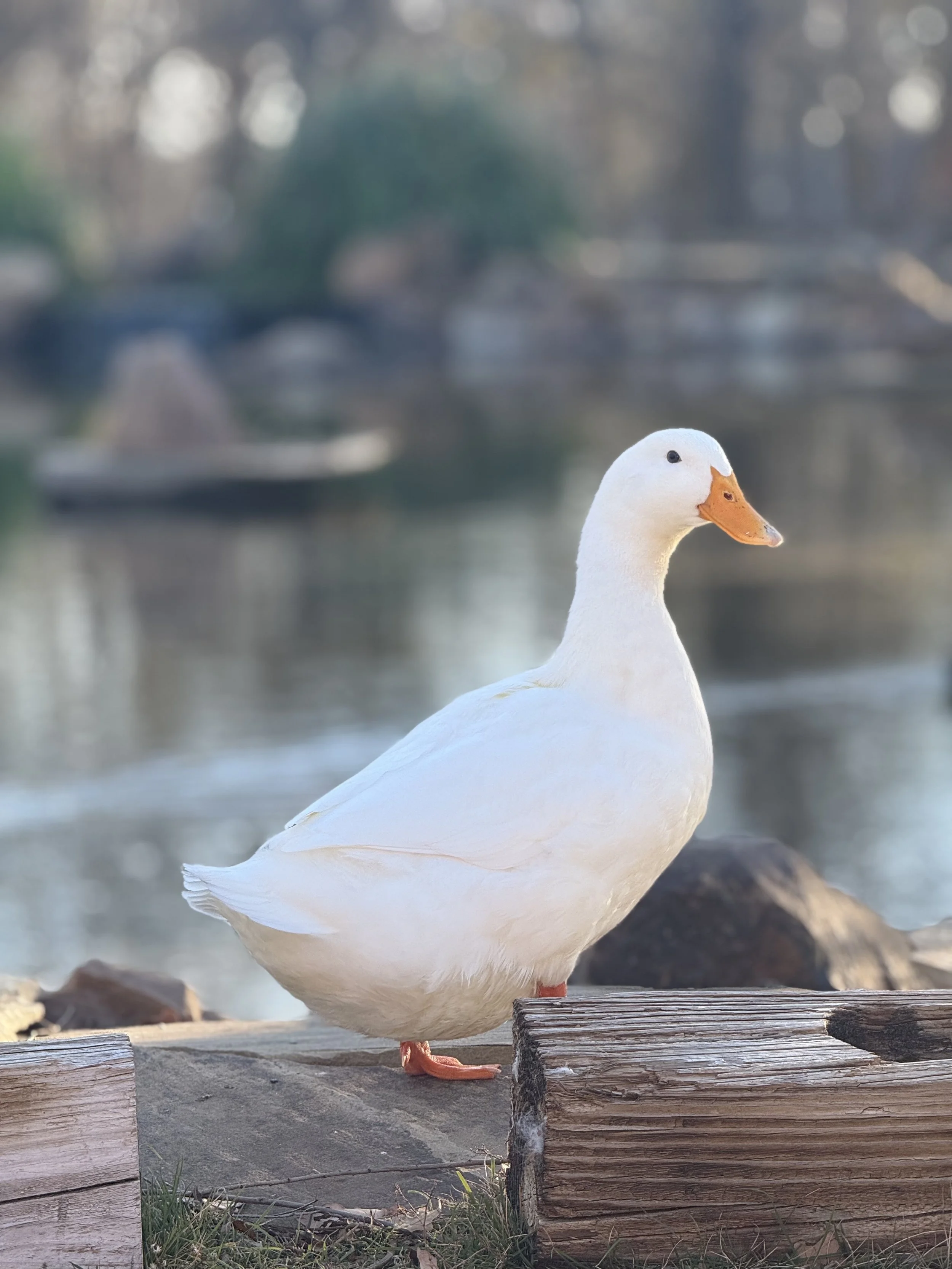
Our ducks are a perfect permaculture example.
Our pond used to require hours of weekly maintenance (manual cleaning and even biological additives to support the water’s health). After the addition of ducks, everything changed. They eat the algae that would otherwise take over, acting as a natural filtration system and helping restore balance to the pond.
They also eat mosquito larvae and adult mosquitos, which has made a truly noticeable difference during warmer months.
Furthermore, ducks are territorial and their presence helps deter other migratory birds that can bring disruption or disease.
While it’s not a pleasant thing to think about, here at Lavenwell, they serve as a decoy. Ducks stay out at the pond overnight, and in the rare event of a predator, I would much rather lose a duck than a hen or a goat. Thankfully, with our livestock guardian dogs maturing and doing their job well, this hasn’t been an issue—but it’s still part of the design for ducks to be an easier predator pick-off.
Beyond their work, ducks bring something harder to measure but just as valuable: joy. Their quacks, their waddles, the way they move through the water—it makes me smile.
Even their eggs have a place here. While we don’t enjoy eating duck eggs on their own, they’re excellent for baking. Any extras get fed back to the dogs and chickens for added protein. Nothing goes to waste.
That’s permaculture in real life. Not perfection. Not aesthetics alone. Just thoughtful stewardship—allowing each animal to live out its purpose, and letting the land become healthier because of it.